Fraud is the most common crime in the UK, yet when we look closer at the numbers, something troubling emerges: the data is incomplete. We know that hundreds of thousands of people are scammed each year, but when it comes to cash‑only scams — those doorstep cons, rogue traders, or courier frauds where victims hand over money directly — the statistics vanish into a grey area.
This missing data raises an important question: are people over 60 genuinely more likely to be targeted by cash crime, or is it simply that they report it more often?
📊 What We Know — and What We Don’t
- Fraud prevalence: Around 22–23% of people aged 65+ report being victims of fraud each year.
- Cash scams: Doorstep and courier frauds often involve cash handovers, and charities say older adults are disproportionately affected.
- Reporting rates: Older adults are more likely to report fraud than younger victims, who often dismiss smaller losses or feel embarrassed.
But here’s the paradox: if older adults report more, then the data may exaggerate their vulnerability while under‑representing younger victims who stay silent.
🤔 Challenging the “Vulnerable Older Person” Narrative
As an older person, you may not feel more vulnerable at all — in fact, many people over 60 feel empowered by a lifetime of knowledge and experience. The constant blanket representation of older adults as fragile or unable to cope with money is misleading. It might be true for some, but not for everybody.
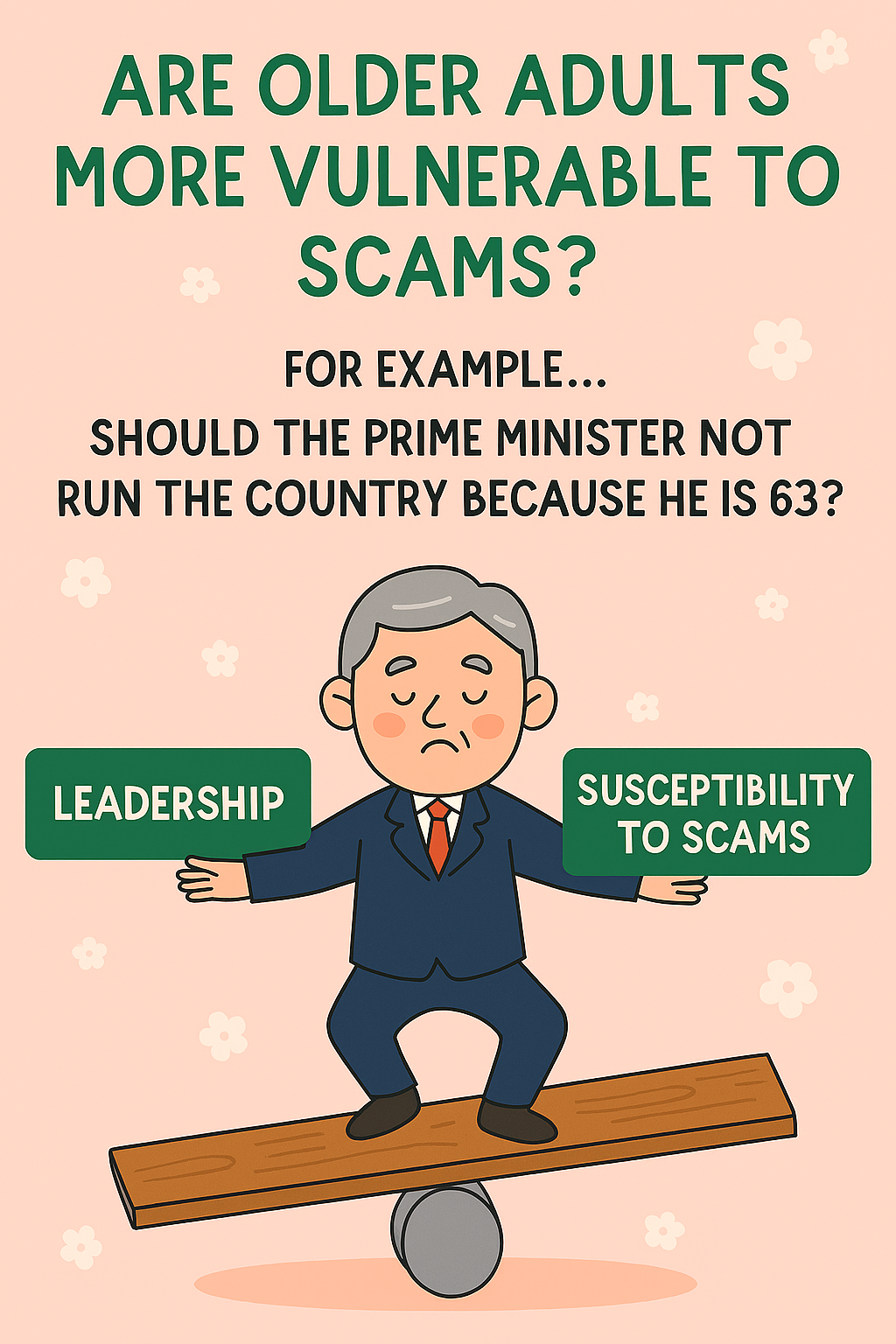
To illustrate the absurdity of this stereotype, consider this: the Prime Minister himself is over 63. Does that automatically mean he is more susceptible to scams? Should his age alone disqualify him from running the country? Of course not. Leadership, financial literacy, and resilience are not determined by age — they are shaped by experience, awareness, and support systems.
This example shows how dangerous it is to reduce older people to a single narrative of vulnerability. Many are empowered, resourceful, and proactive in reporting crime. Recognising this strength is just as important as addressing risk.
🧩 What Can Be Extrapolated
- Older adults may appear more at risk simply because they report more.
- Younger victims may be under‑counted, creating a skewed picture of who is really being scammed.
- Blanket narratives about vulnerability can erase the diversity of older people’s experiences — from those who feel confident and empowered to those who may need extra support.
- Policy blind spots: Without nuanced data, interventions risk being misdirected, focusing only on “protecting the vulnerable” rather than empowering all age groups.
🌟 A Call for Better Data
Fraud is not just a statistic — it’s a lived reality. The missing data on cash scams leaves us unable to see the full picture. If we want to protect people of all ages, we need transparency: age‑specific, method‑specific fraud data that tells us who is being targeted, how, and with what consequences.
And we need to move beyond stereotypes. Older adults are not automatically vulnerable; many are empowered, resourceful, and proactive in reporting crime. Recognising this strength is just as important as addressing risk.
📜 Disclaimer
This blog is for awareness and discussion purposes only. It does not provide legal or statistical advice. Figures are drawn from publicly available surveys and reports (ONS, Age UK, Trading Standards), but exact numbers for cash‑only scams are not published. Readers are encouraged to consult official sources and support organisations for the most up‑to‑date information.