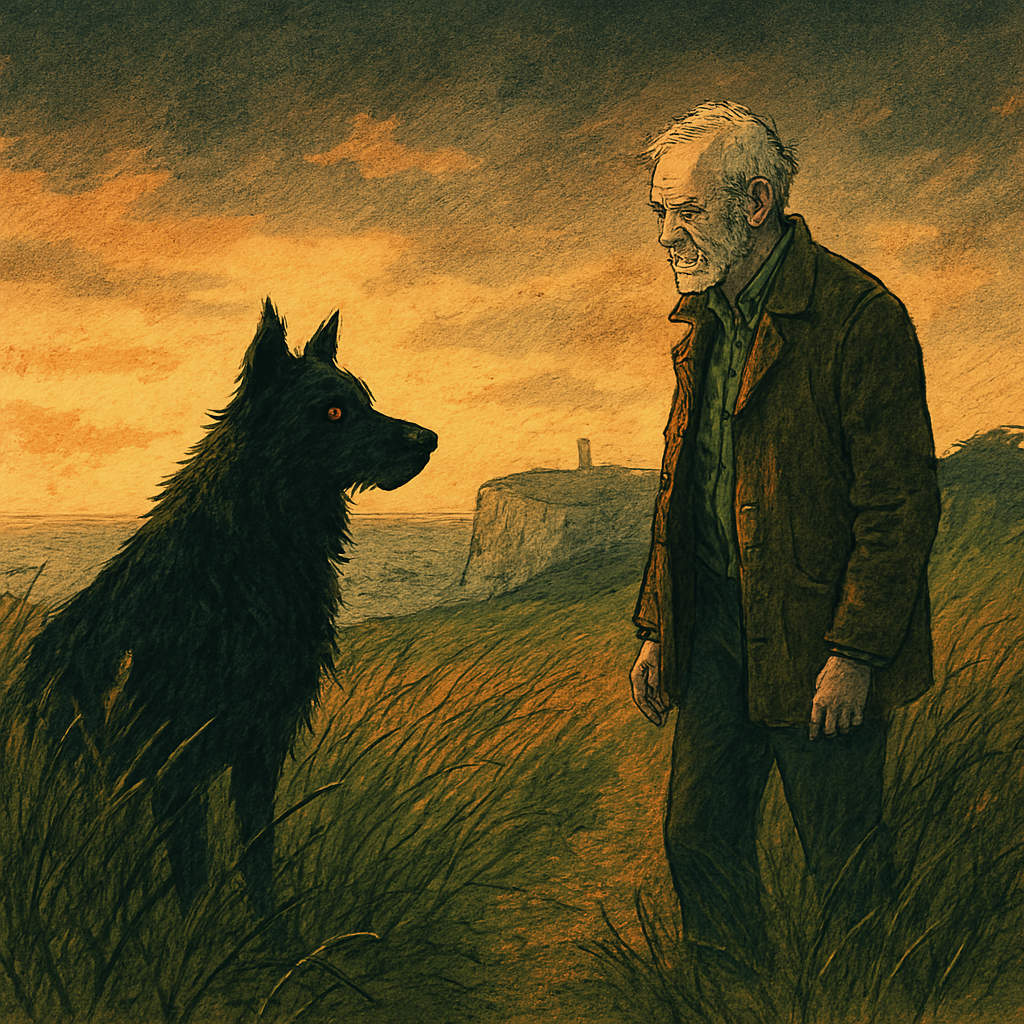
At the heart of the film is a simple but powerful premise: A man glimpses a mysterious black dog moving through the long grass and sets out across the Sussex countryside to find it — driven by a question only the creature can answer.
It’s a story rooted in Sussex folklore, where the black dog (sometimes called Padfoot) is said to appear as an omen or a guide. But the film uses this legend in a more intimate way, turning it into a symbol of:
- grief
- memory
- unanswered questions
- the things we chase because we can’t let them go
It’s folklore, but it’s also deeply human.
🌾 Sussex Isn’t Just a Setting — It’s a Character
One of the most striking things about The Dog in the Long Grass is how lovingly it captures the Sussex landscape. Not the postcard version — the real one:
- rolling grasslands
- windswept edges
- ancient ruins
- the quiet, eerie beauty of open space
For those of us who know Sussex well, it feels instantly recognisable. For those who don’t, it’s an invitation.
🎨 A Short Film With Long After‑Effects
Though only five minutes long, the film leaves a lingering emotional imprint. It’s the kind of short that stays with you — not because of dramatic twists, but because it taps into something older, quieter, and more instinctive.
It’s perfect for anyone who loves:
- folklore
- psychological storytelling
- atmospheric animation
- mythic symbolism
- Sussex heritage
And for creatives, it’s a reminder of how powerful short‑form storytelling can be when it’s crafted with intention.
🐕 A Black Dog, a Man in Pain, and a Walk Into the Unknown
The film begins with a man who sees a mysterious black dog moving through the long grass. In Sussex folklore, the black dog is an omen — a creature that appears when someone is standing at a crossroads in their life.
But in this story, the symbolism goes deeper.
The man’s journey across the Sussex landscape feels like the kind of walk someone takes when they’re carrying something heavy inside — a grief, a fear, or a question they don’t know how to face. The film never states this outright, but it gently suggests the emotional territory of someone who may be feeling lost, overwhelmed, or close to giving up.
It’s handled with subtlety, not sensationalism. The dog becomes a mirror — a guide — not a threat.
🌾 A Quiet Exploration of Suicidal Thoughts — Without Ever Romanticising Them
The film never depicts self‑harm, nor does it glorify despair. Instead, it captures something many people recognise:
- the feeling of walking because you don’t know what else to do
- the sense of being pulled toward something you can’t name
- the hope that something might listen, even if no one else can
The black dog becomes a symbol of that moment — the moment when someone is standing on the edge of a decision, searching for meaning, connection, or a reason to keep going.
It’s folklore used as emotional truth.
✨ The Ending: Quiet, Magical, and Life‑Changing
When the man finally reaches the dog, something unexpected happens.
The dog listens.
Not with words. Not with answers. But with presence.
And in that moment, the man learns something that changes him — something small, quiet, and powerful:
He is not alone. His pain is seen. And there is still a path forward.
The ending isn’t dramatic. It’s gentle. It’s magical in the way real moments of clarity are magical — the kind that arrive softly and shift everything.
It’s the kind of ending that leaves you breathing a little deeper.
🎨 A Living, Breathing Style: The “Boiling Line” Technique
One of the most striking things about Dog in the Long Grass is its visual texture — the way the lines seem to shimmer and shift, even when nothing is moving. This comes from the boiling line technique, where each frame is redrawn by hand, giving the whole film a gentle, flickering life of its own. And it means the landscape isn’t just a field — it’s a piece of artwork in motion, every blade of grass alive with intention. The Sussex meadow becomes a character in its own right, breathing with the man’s emotions and holding the weight of the story.
The black dog feels both real and otherworldly, hovering between myth and memory. Every trembling line deepens the film’s themes of grief, uncertainty, and transformation, turning a simple setting into something quietly magical.
🌊 Why It Matters to Bring Suicidal Feelings Into the Open — and Why Beachy Head Appears in the Final Scene
One of the most powerful things about Dog in the Long Grass is the way it gently acknowledges the kinds of thoughts people often keep hidden. Suicidal feelings thrive in silence — and that silence is what makes them so dangerous.
By hinting at these emotions without ever glorifying them, the film helps bring them into the open, where they can be spoken about, understood, and met with compassion rather than shame. The choice to end at Beachy Head is heartbreaking but meaningful: it’s a place known for its beauty and its association with emotional crisis, and the film uses it symbolically rather than sensationally. Instead of focusing on tragedy, the scene becomes a turning point — a moment where the man is met, listened to, and changed before a decision is made.
It’s a reminder that reaching out, being heard, and being met with presence can shift the path someone is on.
🎬 Why You Should Look Out for This Film
The Dog in the Long Grass premiered at the Manchester Animation Festival 2025, and it’s expected to appear on:
- BFI Player
- UK festival circuits
- Vimeo Staff Picks
- Regional screenings
It’s only five minutes long, but it stays with you much longer.
If you care about Sussex folklore, emotional storytelling, mental‑health symbolism, or simply beautifully crafted animation, this is a film you won’t want to miss.
It’s an important reminder that small acts of listening can change a life, and that kindness — no matter how small — truly matters.
What makes the film so quietly powerful is the way it shows that listening matters. Not grand gestures. Not perfect words. Just presence. The man’s encounter with the black dog becomes a metaphor for the kind of moment many people need when they’re struggling — someone, or something, that simply stays with them long enough for the storm inside to shift. It’s a reminder that small actions can have enormous impact: a conversation, a pause, a moment of being heard. These are the things that pull people back toward life, and the film captures that truth with a tenderness that lingers.
Keep an eye out for it — this is a Sussex gem with a message that matters.
Here is the first haunting look at the film:
The Dog in the Long Grass – Animated Short Film | Trailer | British Sussex Folklore about Death, (Produced by Seb Cox Films)
Content note: This blog discusses themes related to emotional crisis and suicidal feelings in a symbolic, non‑graphic way. If you’re finding things difficult right now, consider reaching out to someone you trust or a trained professional who can offer support.
Disclaimer: Picture for illustrative purposes only.