In a world where children learn about themselves and others through play, representation isn’t a luxury — it’s essential. That’s why the recent launch of Barbie’s first autistic doll has captured so much attention and admiration. Mattel, the company behind Barbie, has been steadily expanding its Fashionistas line to reflect a broader spectrum of human experiences, and this latest addition marks another powerful step forward.
According to multiple reports, including Mattel’s own announcement, the autistic Barbie was developed over more than 18 months in partnership with the Autistic Self Advocacy Network (ASAN). The goal was to create a doll that respectfully reflects some of the ways autistic people may experience the world — from sensory tools to subtle design choices like a slightly averted gaze, which mirrors how some autistic individuals avoid direct eye contact.
This isn’t just a toy. It’s a message: every child deserves to see themselves represented.
💛 Why This Matters
Children use dolls to explore identity, empathy, and imagination. When toys reflect real diversity — including disabilities, neurodivergence, and medical conditions — they help normalize differences and foster understanding from an early age. For autistic children, seeing a doll that mirrors aspects of their own experience can be affirming. For non‑autistic children, it opens the door to learning and compassion.
This is the heart of inclusive play: creating a world where everyone belongs.
🌟 What’s Included in the Autism Barbie?
The autistic Barbie comes with thoughtful features designed to reflect common autistic experiences:
- Sensory-friendly accessories such as a fidget spinner and noise-cancelling headphones
- Articulated wrists and elbows to allow stimming motions like hand-flapping
- A slightly averted gaze representing how some autistic people avoid direct eye contact
- Clothing designed with sensory sensitivity in mind
These details were shaped with direct input from autistic advocates — a crucial step in avoiding stereotypes and ensuring authenticity.
🌼 Other Inclusive Dolls in the Barbie Fashionistas Range
Barbie’s inclusive line has been growing for years, and the autistic Barbie joins a meaningful collection that already includes dolls representing a wide range of lived experiences. Some of the most notable include:
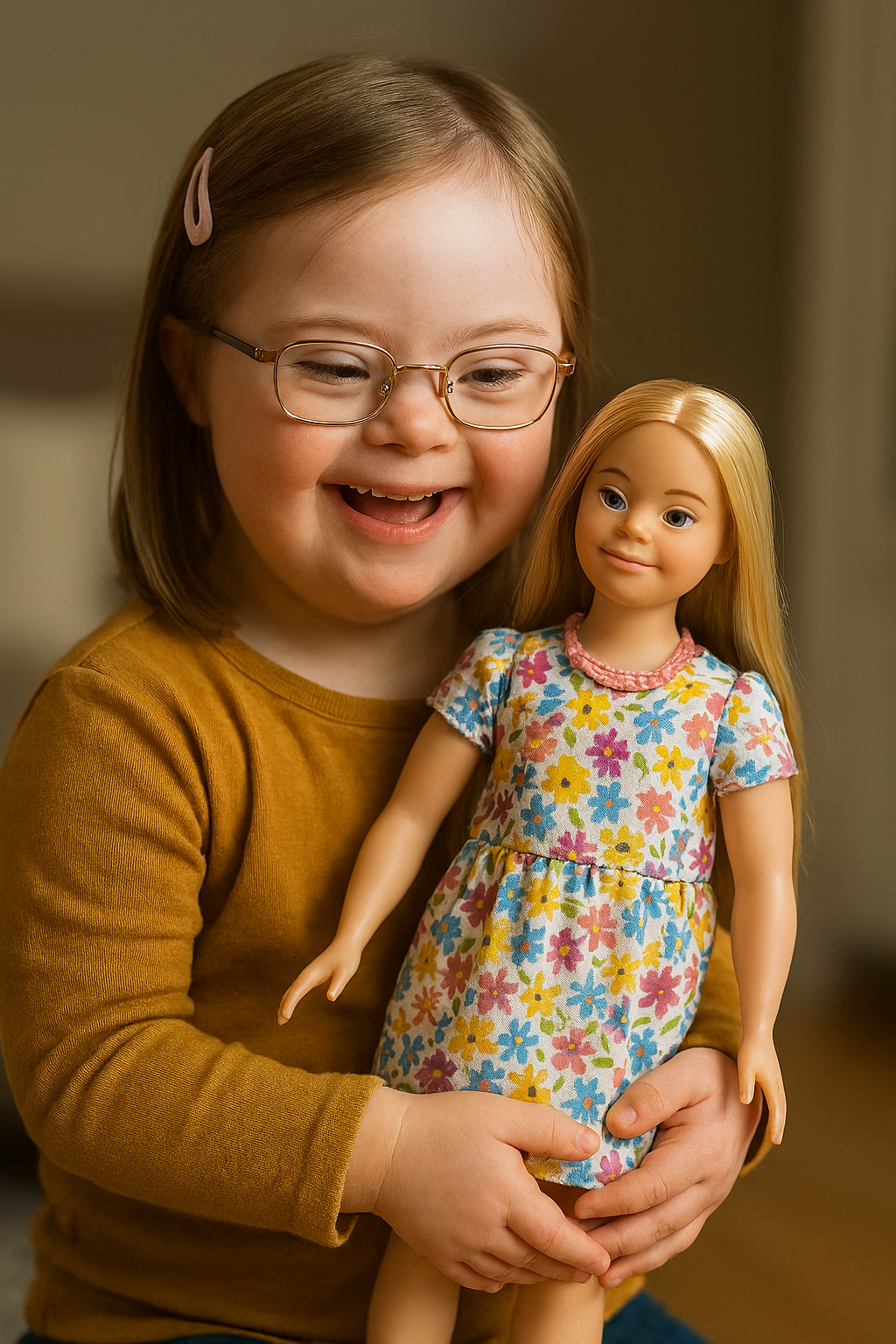
- Barbie with Down syndrome — created in collaboration with the National Down Syndrome Society to ensure accurate representation
- Barbie with a prosthetic limb — designed with the help of individuals with limb differences
- Barbie with vitiligo — featuring realistic skin depigmentation patterns
- Barbie with a hearing aid — normalizing hearing differences
- Barbie with Type 1 diabetes — including a glucose monitor and medical accessories
- A wheelchair-using Barbie and Ken — improving visibility for mobility device users
- A blind Barbie — part of the brand’s commitment to representing visual impairment
Sources:
This range is now one of the most diverse mainstream doll collections ever produced.
🌍 Other Brands Creating Inclusive Dolls
Barbie isn’t alone in this movement. Across the toy industry, more companies are recognizing the importance of representation:
- American Girl’s diverse characters include dolls with hearing aids, diabetes kits, and more.
- Lottie Dolls offer a doll with a cochlear implant and another with a prosthetic leg.
- Miniland Dolls focus on racial diversity and include dolls with Down syndrome.
- Our Generation Dolls feature accessories like wheelchairs, service dogs, and medical kits.
The shift is clear: toys are becoming more reflective of the real world — and that’s a beautiful thing.
💬 Final Thoughts
Seeing Barbie expand its inclusive range with an autistic doll is more than a headline — it’s a cultural moment. It signals a future where children grow up understanding that differences are not just accepted but celebrated. For families, educators, and advocates, these dolls are tools for empathy. For children, they’re mirrors and windows: mirrors that reflect their own identity, and windows that help them understand others.
At Kind Health Hub, we believe in kindness through awareness — and inclusive toys are a powerful way to nurture that from the very beginning.