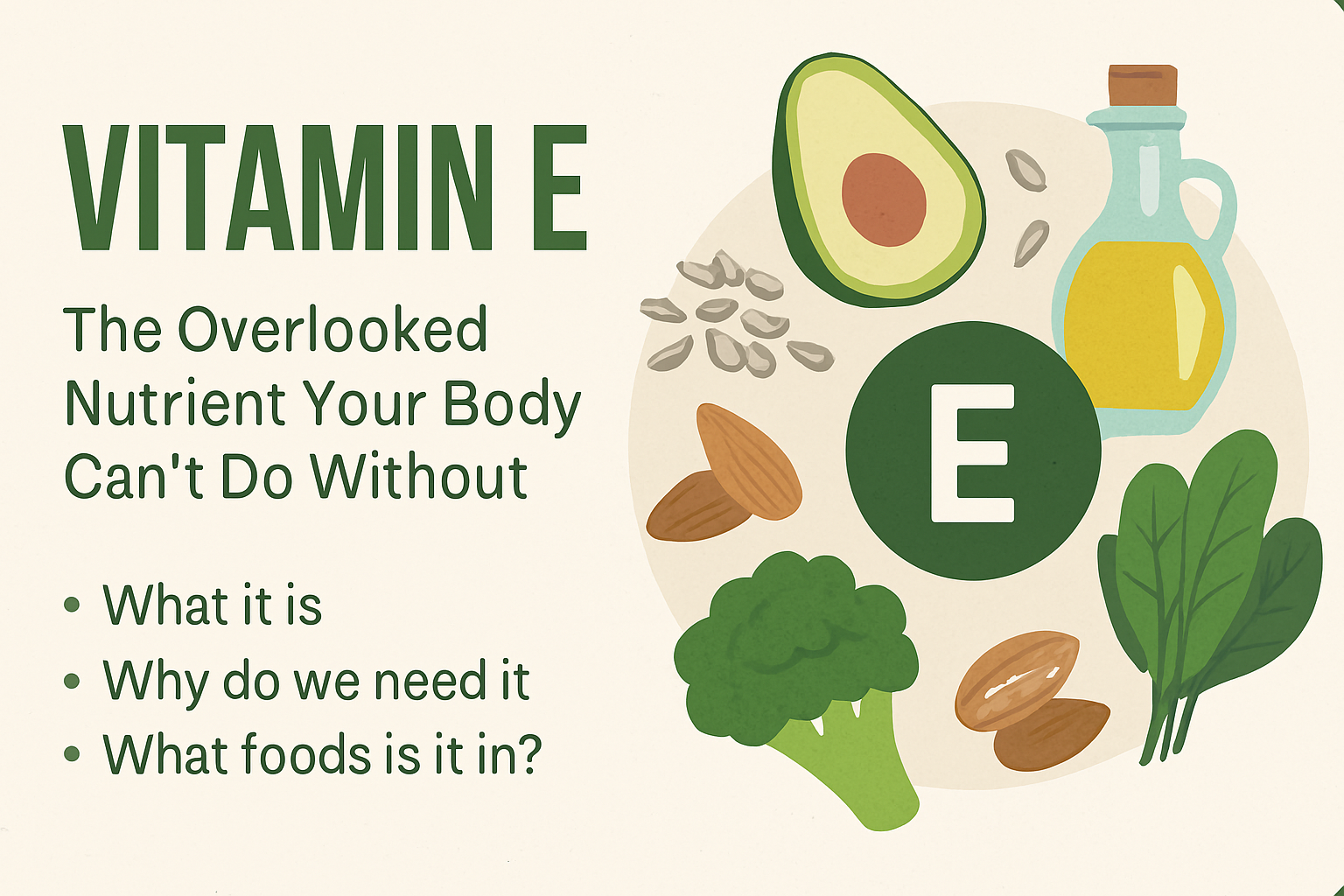
Most people know about vitamin C or vitamin D, but vitamin E is often overlooked. Yet this powerful antioxidant plays a vital role in protecting your cells, boosting immunity, and keeping your skin and eyes healthy. If you’ve ever wondered “What is vitamin E good for?” or “Which foods are high in vitamin E?” — here’s your complete guide.
What Is Vitamin E?
Vitamin E is a fat-soluble nutrient made up of eight compounds, with alpha-tocopherol being the most active form in humans. Its main job is to act as an antioxidant, protecting your cells from free radical damage — unstable molecules linked to aging, heart disease, and cancer.
Key vitamin E benefits include:
- Protecting cells from oxidative stress
- Supporting immune function
- Promoting skin repair and reducing UV damage
- Helping maintain healthy vision
🥑 Vitamin E Foods: Where to Find It
You don’t need supplements to meet your vitamin E needs — it’s abundant in everyday foods. Add these to your diet for a natural boost:
- Plant oils: Sunflower oil, olive oil, rapeseed oil, soybean oil
- Nuts & seeds: Almonds, hazelnuts, sunflower seeds
- Wheat germ: Wheat germ oil is one of the richest sources
- Leafy greens: Spinach, kale, broccoli
- Avocados and fortified cereals
💡 Tip: A handful of almonds or a drizzle of olive oil can cover most of your daily requirement of vitamin E.
How Much Vitamin E Do We Need?
The recommended daily intake is modest but essential:
- Men: 4 mg per day
- Women: 3 mg per day
Because vitamin E is stored in the body, you don’t need to consume it every single day — but a balanced diet with oils, nuts, and greens will easily keep you covered.
Vitamin E Supplements: Do You Need Them?

High-dose supplements aren’t recommended unless prescribed. Too much vitamin E can interfere with blood clotting and increase bleeding risk. For most people, food sources are the safest and most effective way to get enough vitamin E.
The Bottom Line
Vitamin E may not be as famous as vitamin C, but it’s a quiet powerhouse in your diet. By eating vitamin E-rich foods like nuts, seeds, and leafy greens, you’ll strengthen your immune system, protect your cells, and support long-term health.
Disclaimer: Kind Health Hub provides content for general informational and educational purposes only. While every effort is made to ensure accuracy, details about products, services, policies, and lifestyle guidance may change over time. Readers should always verify information directly with manufacturers, healthcare providers, or official sources before making decisions. The content does not constitute medical, nutritional, financial, or legal advice, and any recommendations are shared for general guidance only.



One comment on “Vitamin E: The Forgotten Antioxidant that your body needs.”