When we talk about equality, disabled people are too often left out of the conversation. This week’s headlines show just how urgent the situation has become — from pay gaps to welfare cuts, and even debates about assisted suicide. Let’s break down what’s happening and why it matters.
The Disability Pay Gap
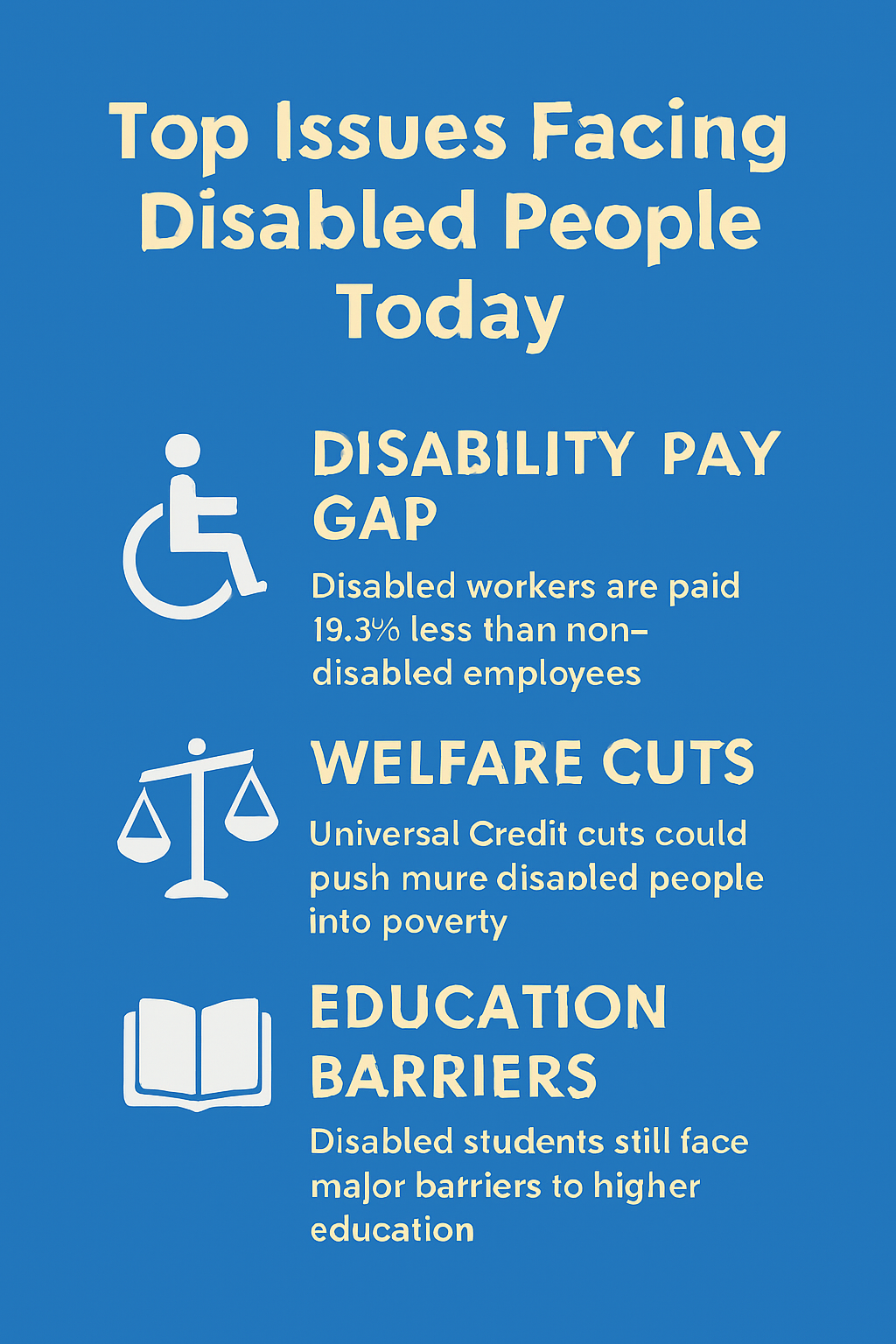
- Disabled workers in the UK earn 15.5% less than non-disabled colleagues — that’s about £4,000 a year.
- Campaigners marked Disability Pay Gap Day on 12 November, saying that from now until the end of the year, disabled employees are effectively “working for free” compared to their peers.
- The government is consulting on mandatory pay gap reporting for large companies, but activists argue this should apply to firms with 50+ staff, not just the biggest employers.
👉 Why it matters: Pay inequality isn’t just about numbers. It means less financial independence, fewer opportunities, and greater vulnerability to poverty.
Assisted Suicide Under Pressure
- Disabled activists, including Liz Carr, warned MPs that the UK’s health and care funding crisis could push people toward assisted suicide if it becomes legal.
- They argue that without proper NHS and social care support, people may feel they have no choice.
- Disabled People’s Organisations (DPOs) say they’ve been excluded from parliamentary debates, despite being directly affected.
👉 Why it matters: This isn’t just a moral debate. It’s about whether society provides real support, or leaves people to face impossible decisions.
Education and Welfare Cuts
- Reports show disabled students still face major barriers in higher education.
- The Covid Inquiry revealed that flawed systems caused serious harm to disabled children during the pandemic.
- The Department for Work and Pensions (DWP) confirmed cuts to the health element of Universal Credit will begin in April 2026.
- Campaigners also warn that adding VAT to Motability vehicles could increase costs by £3,000, pricing many disabled drivers out of independence.
👉 Why it matters: These changes hit everyday life — from studying to working to simply getting around.
Global Picture
- The UN warns that nearly all disability-related Sustainable Development Goals (SDGs) are off track.
- Disabled people worldwide face higher poverty, unemployment, and food insecurity.
- On a brighter note, Netflix has launched a training scheme for deaf, disabled, and neurodivergent accountants, showing how inclusion can open real career pathways.
👉 Why it matters: Progress is possible, but only if governments and businesses commit to inclusion.
✊ What Needs to Change
Disabled people are not asking for special treatment — they’re demanding fairness. That means:
- Closing the pay gap with mandatory reporting and accountability.
- Protecting welfare and healthcare so people aren’t forced into poverty or pressured into assisted suicide.
- Ensuring disabled voices are heard in every debate that affects them.
🔑 Takeaway
This week’s news is a wake-up call. Disabled people face systemic inequality, but with reform and inclusion, change is possible. Whether it’s pay, welfare, or representation, the message is clear: disabled lives matter, and disabled rights must be protected.
Disclaimer: Kind Health Hub provides content for general informational and educational purposes only. While every effort is made to ensure accuracy, details about products, services, policies, and lifestyle guidance may change over time. Readers should always verify information directly with manufacturers, healthcare providers, or official sources before making decisions. The content does not constitute medical, nutritional, financial, or legal advice, and any recommendations are shared for general guidance only.