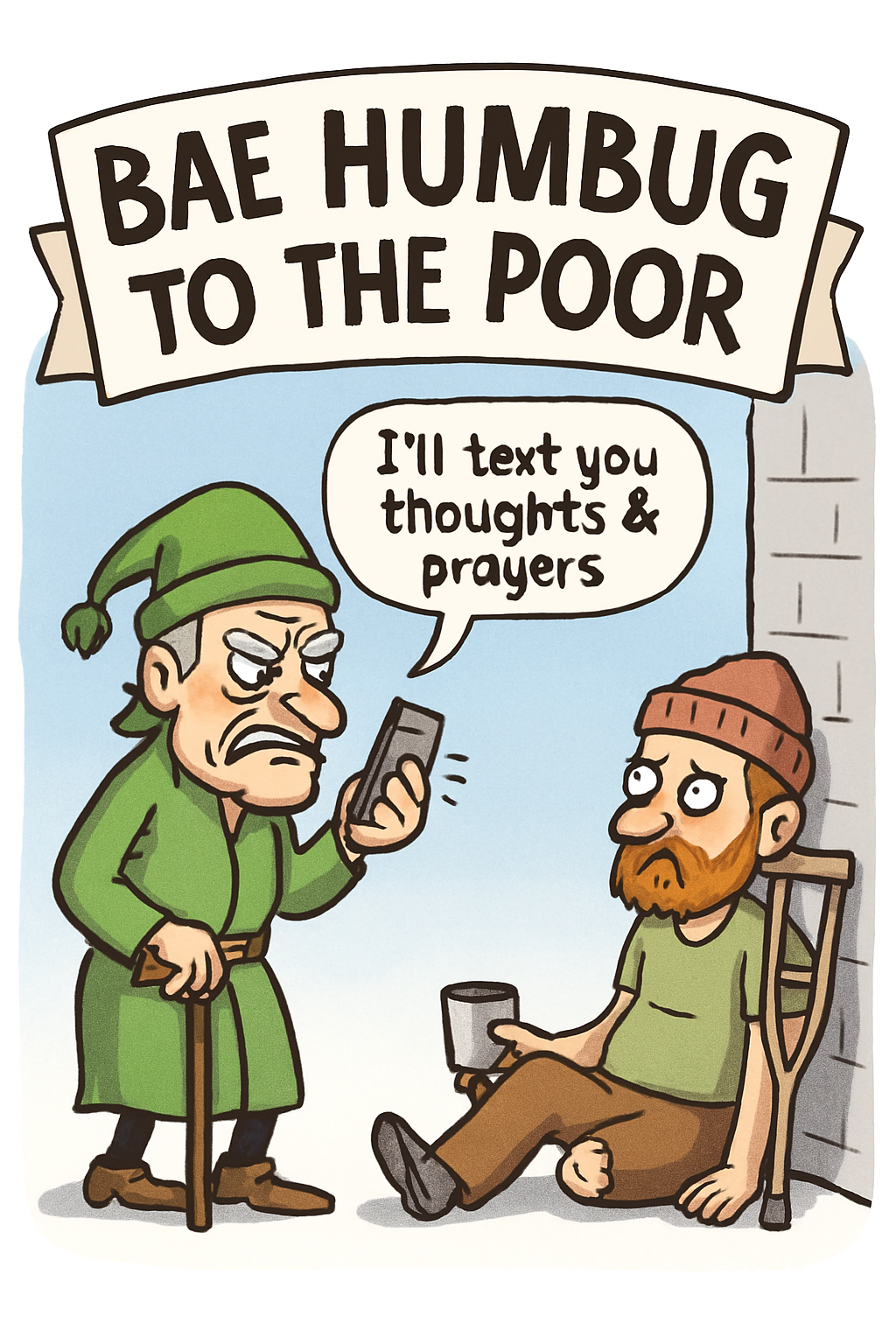
In today’s Britain, disabled people are too often portrayed through a narrow, damaging lens. Headlines and government rhetoric frequently suggest that those on PIP (Personal Independence Payment) or Motability schemes are simply “claiming benefits” or “wanting handouts.” This demonisation has consequences: it shifts public perception, erodes empathy, and undermines support for those who rely on these lifelines.
Much like Charles Dickens’ infamous character Ebenezer Scrooge, who sneered “Are there no prisons? Are there no workhouses?”, society risks echoing a similar sentiment—reducing disabled people to burdens rather than recognising them as citizens with rights, dignity, and contributions.
The Power of Media Narratives
- Negative framing: Stories often highlight fraud or dependency, rather than resilience or achievement.
- Public perception shift: Repetition of these narratives fosters suspicion and resentment.
- Policy impact: When the public mood hardens, governments feel emboldened to cut support.
Why PIP and Motability Matter
- Independence: PIP helps cover extra costs of living with disability.
- Mobility: Motability cars allow people to access work, healthcare, and community life.
- Equality: These schemes are not luxuries—they are enablers of participation in society.
Dickens’ Warning Still Rings True
Dickens wrote A Christmas Carol as a critique of Victorian attitudes toward poverty and need. Scrooge’s dismissive “Bah Humbug” mirrors today’s dismissive rhetoric toward disabled people. The lesson is clear: when society dehumanises the vulnerable, compassion is lost, and injustice thrives.
Reframing the Narrative
To counteract demonisation, we must:
- Highlight lived experiences: Share real stories of how PIP and Motability transform lives.
- Challenge stereotypes: Show that disabled people contribute in countless ways beyond employment.
- Promote solidarity: Remind society that disability can affect anyone, at any time.
Conclusion
The demonisation of disabled people is not just unfair—it is dangerous. It risks creating a society where compassion is replaced by suspicion, and where support systems are dismantled. Dickens warned us of the perils of indifference. Today, we must heed that warning and ensure that disabled people are supported, respected, and valued.
Disclaimer: Kind Health Hub provides content for general informational and educational purposes only. While every effort is made to ensure accuracy, details about products, services, policies, and lifestyle guidance may change over time. Readers should always verify information directly with manufacturers, healthcare providers, or official sources before making decisions. The content does not constitute medical, nutritional, financial, or legal advice, and any recommendations are shared for general guidance only.


2 Comments on “Bah Humbug to the Disabled? How Media Narratives Shape Public Attitudes”
Comments are closed.