Light therapy has become a wellness buzzword, promising everything from glowing skin to faster recovery. But here’s the catch: not all light is created equal. If you’ve been using a red light lamp to ease sore muscles and wondering why it isn’t working, the answer lies in the science of wavelengths.
🔴 Red Light: Great for Skin, Not Muscles
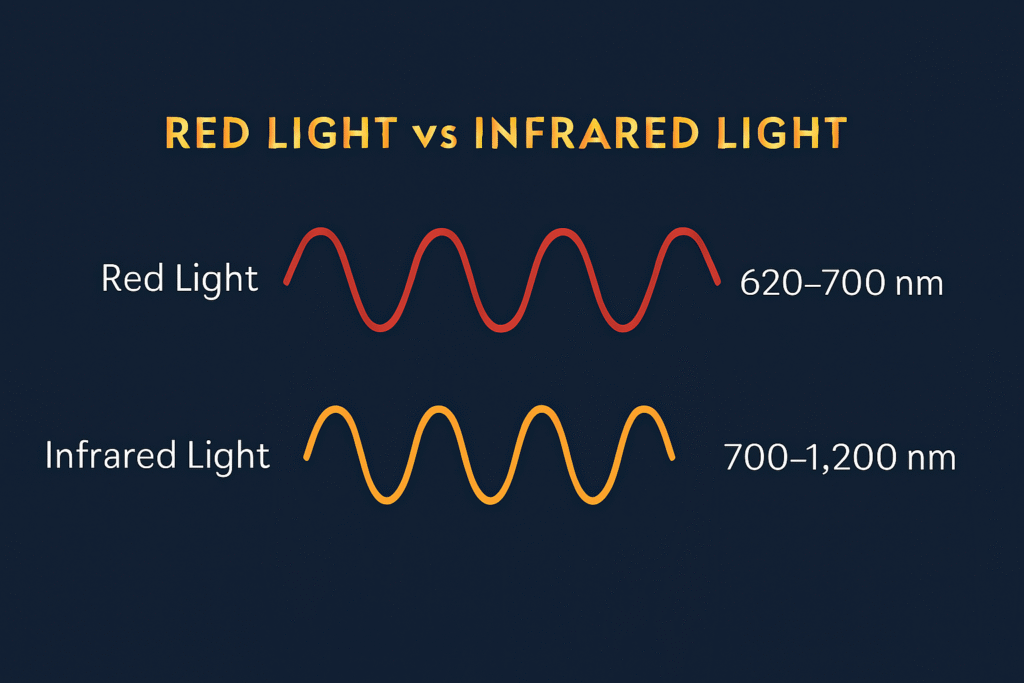
Red light therapy uses visible wavelengths (around 620–700 nanometers). These penetrate only a few millimeters into the skin. That’s perfect for:
- Boosting collagen and elastin
- Improving skin tone and texture
- Supporting wound healing
- Reducing surface-level inflammation
In other words, red light is your friend for skin rejuvenation, but it simply doesn’t reach deep enough to affect muscle tissue.
🌌 Infrared Light: The Muscle Healer
Infrared light therapy uses longer wavelengths (700–1200 nanometers) that are invisible to the eye. These penetrate several centimeters into the body, reaching muscles, joints, and connective tissue. Infrared is known to:
- Improve circulation
- Reduce inflammation
- Ease joint stiffness
- Support muscle recovery after exercise or injury
This deeper penetration is why infrared lamps are the go-to for musculoskeletal pain relief.
The Common Mistake
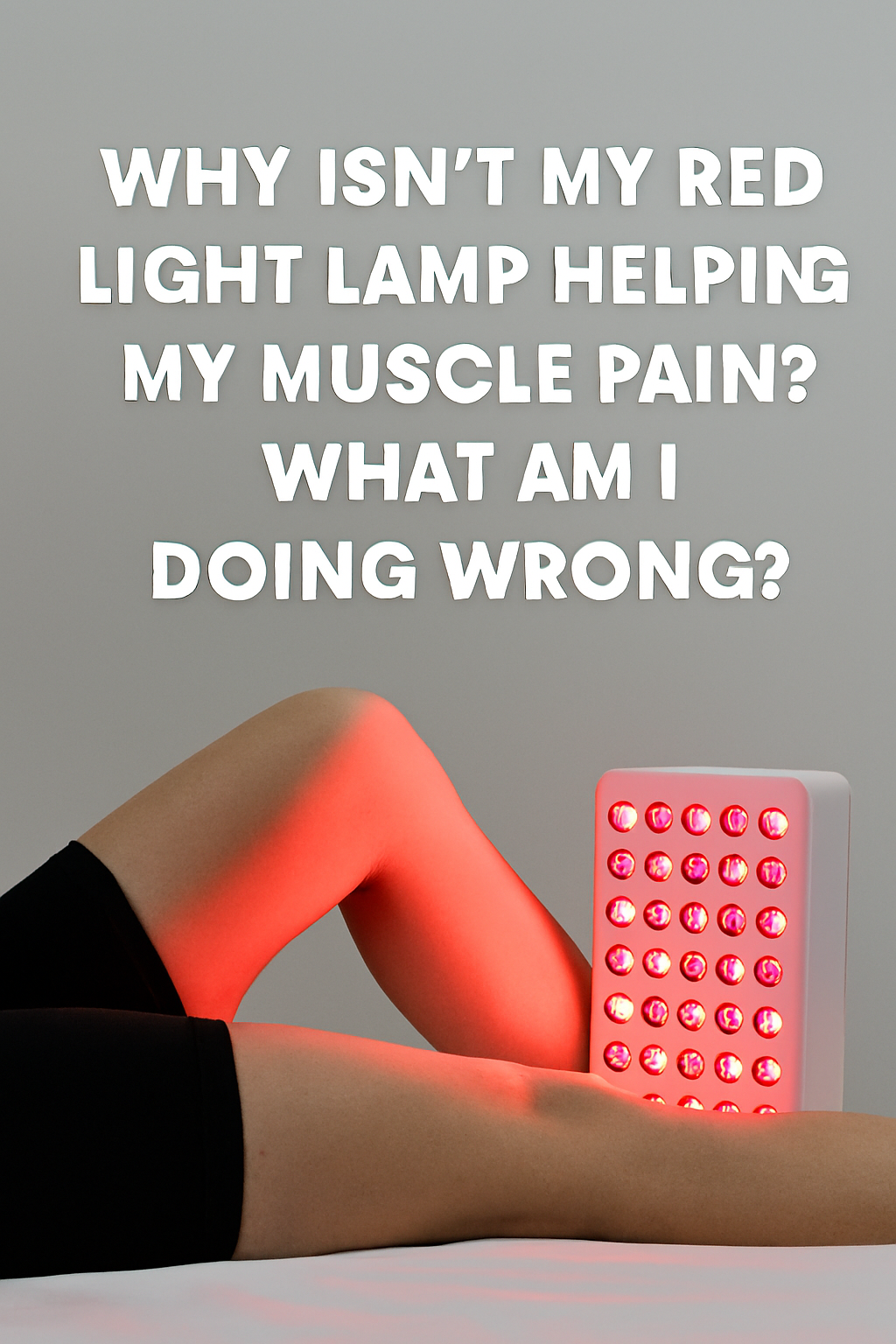
Many people buy a “red light lamp” thinking it will help with muscle pain. But if the device only emits visible red light, it’s targeting the skin, not the muscles. That’s why you’re not feeling the relief you expected.
✅ How to Get Results
- Check your device specs: Look for wavelengths in the 800–1000 nm range (near-infrared).
- Choose combination devices: Panels that include both red and infrared LEDs give you skin and muscle benefits.
- Be consistent: Like exercise, light therapy works best with regular sessions.
- Set realistic expectations: Red light won’t fix muscle pain, but infrared can support recovery alongside stretching, hydration, and rest.
🌟 The Bottom Line
You’re not “doing it wrong” — you’re just using the wrong tool. Red light lamps are for skin. Infrared lamps are for muscles. Once you switch to the right wavelength, you’ll likely notice a big difference in pain relief and recovery.
Disclosure: As an Amazon Associate, I earn from qualifying purchases. This helps support my blog at no extra cost to you.
Disclaimer: Kind Health Hub provides content for general informational and educational purposes only. While every effort is made to ensure accuracy, details about products, services, policies, and lifestyle guidance may change over time. Readers should always verify information directly with manufacturers, healthcare providers, or official sources before making decisions. The content does not constitute medical, nutritional, financial, or legal advice, and any recommendations are shared for general guidance only.
Image for illustration purposes only.